
Last updated: 17 Jul 2026
Libryo Sites provides you with a complete, customized, and automated legal register, available online in one central place. This legal register is called the Requirements module, and it includes all the legal requirements that are applicable to your specific operations, based on your location and industry.
Through the Requirements module, you can easily browse and search relevant legislation, organized by topic, making it simple to find exactly what you need.
This article walks you through how to navigate, search, filter, update compliance status, manage tasks, leave comments, and export your register.
Navigating Your Legal Requirements
1. Use the left-side menu and click on the Requirements button to access a list of all applicable legislation. Only the sections that apply to you will be displayed.
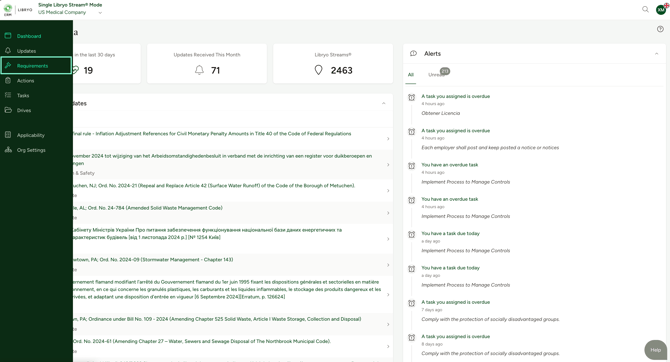
2. By default, your list of legal requirements will appear as an expanded view, allowing you to easily review each main requirement along with its related sections.
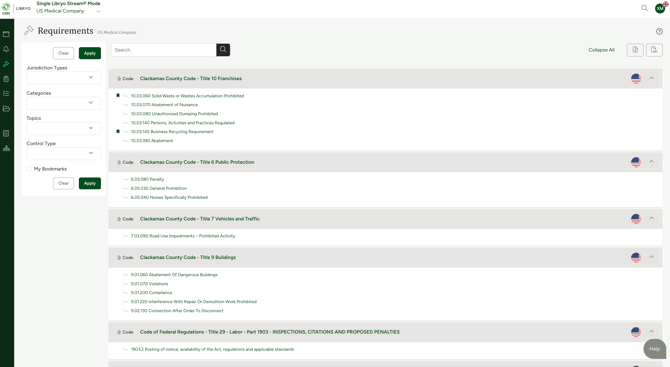
3. If you prefer, click ‘Collapse All’. This will show only the main legal requirements in the list.
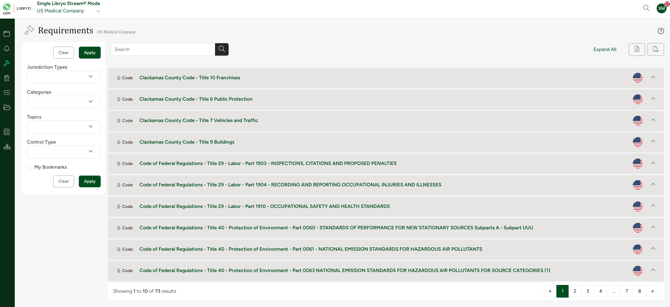
4. If you click on the main legal requirement, you’ll be directed to the Requirements Document, where you can view the entire document issued by the government, including all its sections.
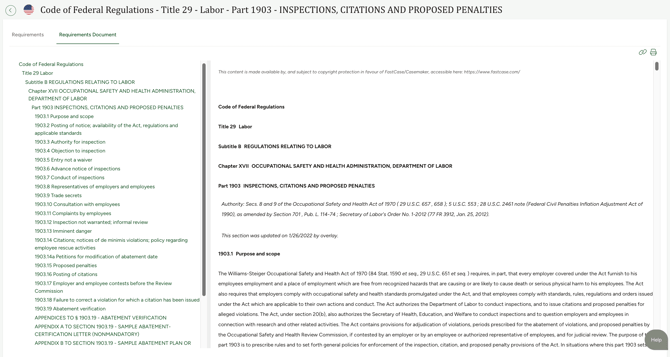
5. Select the Requirements section to go to the page displaying only the sections applicable to your site.
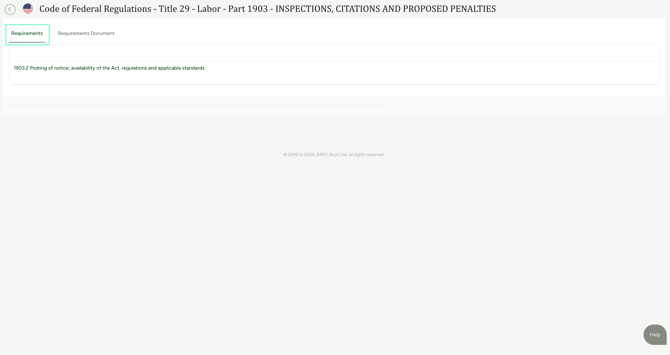
Click on a specific section to be redirected to a page with relevant information about it.
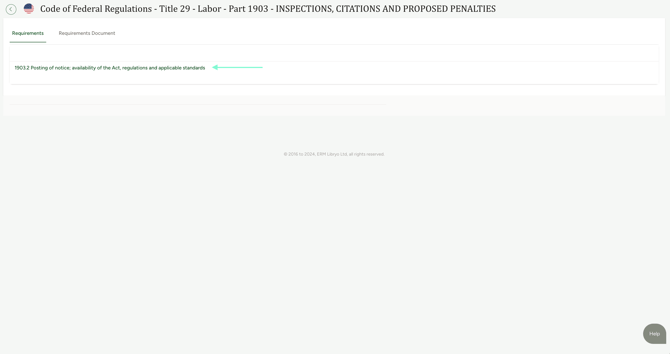
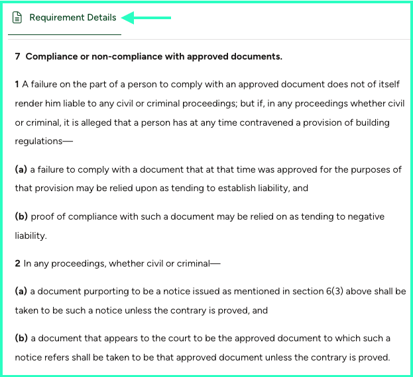
The Requirement Detail Panel
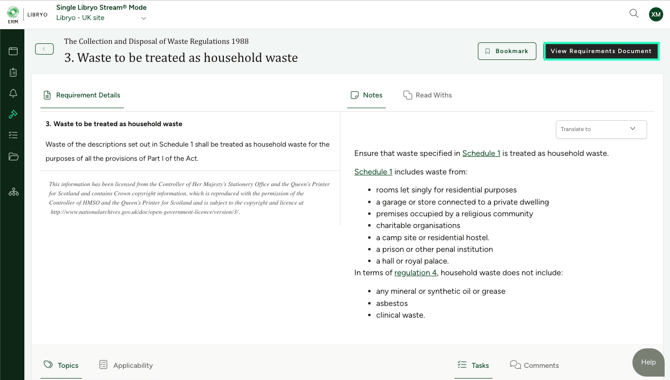
On the section's page, you will find the following components:
- Requirement Details: View the actual legal text of the requirement.
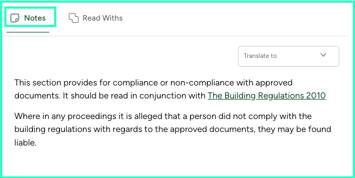
- Notes: A summarized version providing a plain language explanation of the section.
- Read Withs: Check related citations, including consequences, amendments, and general information.
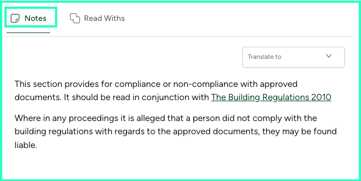
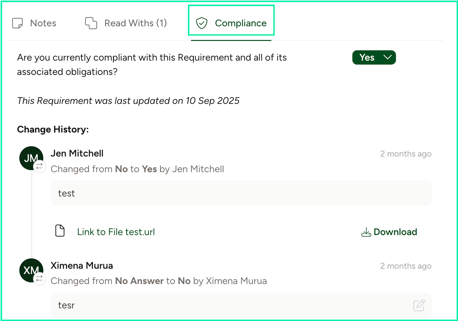
- Compliance Status – Record and update your organisation's compliance position for this requirement (see below).
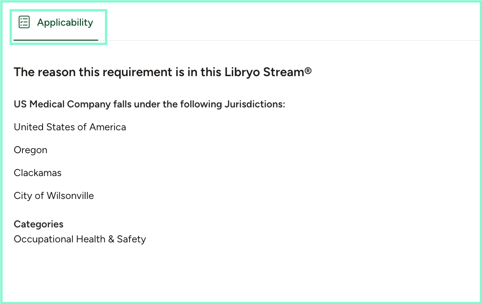
- Applicability: Understand why this requirement is in this Libryo Stream.
- Tasks: Manage your to-do list by adding tasks related to a specific section of the law.
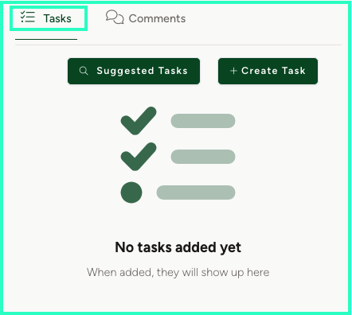
Every requirement includes Suggested Tasks – AI-generated compliance actions based on what that requirement is asking of your organisation. These tasks are a starting point: you decide which ones are relevant to your process and whether to add them to your task list.
To work with Suggested Tasks:
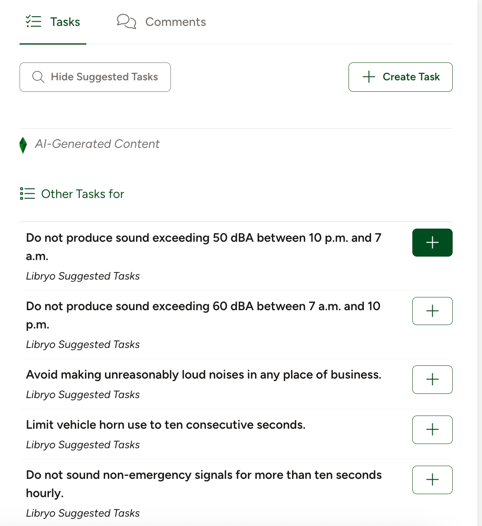
- Open a requirement and navigate to the Tasks tab in the side panel.
- Review the suggested tasks listed. Click + next to any task you want to include in your compliance process.
- Once added, the task will appear in your Task Manager, where you can assign it to a team member, set a due date, and track its progress.
- You can also create your own custom tasks for any requirement directly from the Tasks tab, tailored to your organisation's specific processes.
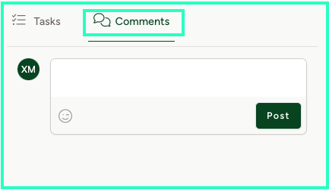
- Comments: Mention colleagues or leave an audit trail by adding comments.
If you wish to view the full legal content of the legislation, not just your requirements, click on View Requirement Document.
Marking Compliance Status
The Compliance Status tab allows you to record your organisation's compliance position for each requirement. This is key for tracking and reporting on compliance across your legal register.
To update the compliance status:
- Open a requirement and click the Compliance Status tab.
- Select the status that best reflects your current position:
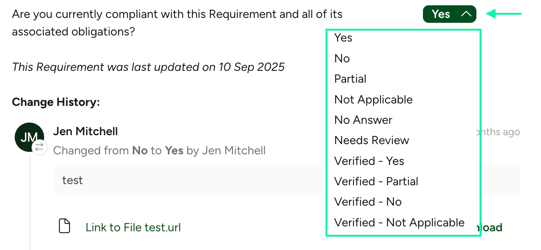
- Compliant – Your organisation meets this requirement.
- Non-Compliant – Your organisation does not currently meet this requirement.
- Working Towards Compliance – Actions are in progress to achieve compliance.
- Not Applicable – This requirement does not apply to your specific situation.
Your compliance status selections are saved and can be used to filter requirements (see Filtering section below) and to generate compliance reports. You can update the status at any time as your compliance position changes.
Searching Your Requirements
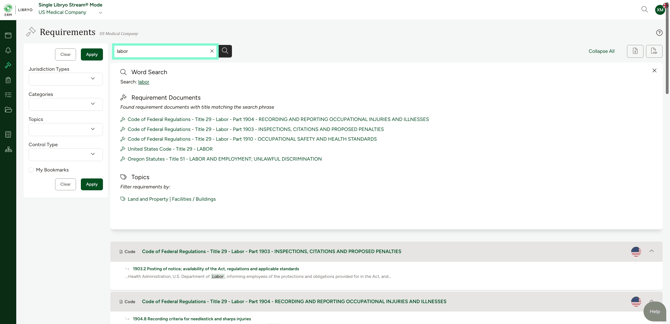
Libryo Sites also gives you the ability to search for a specific term among all your legal requirements. To do this, simply type in the concerned word, and the system will return the Requirement Documents that refer to that term, as well as the topics related to it. If you prefer, you can also run the Word Search which will identify all legal requirements that contain the searched term in their legal text.
1. Click on the search bar and type the concerned term.
2. Select whether you want to search by Word Search, Requirement Documents or Topics.
3. Only results related to the searched term will show.
Requirements Overview: AI-Generated Summary
When you search for a word or phrase, a Requirements Overview panel appears on the right side of the screen. This panel includes a Generate AI Summary option, which uses AI to produce a plain-language summary of the requirements related to your search.
To generate an AI summary:
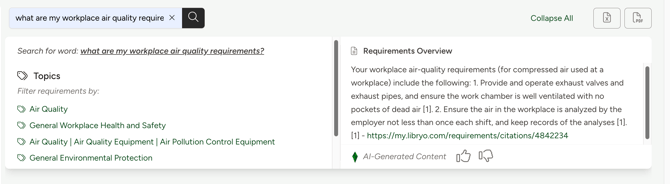
- Type a keyword or a natural language question in the search bar (e.g. "what are my workplace air quality requirements?").
- In the Requirements Overview panel on the right, click Generate AI Summary.
- The summary will load in a few seconds, providing a concise overview of the applicable requirements for your search term.
- Use the thumbs up / thumbs down icons to rate the quality of the summary and help improve the feature.
Note: AI-generated summaries are based on the requirements that apply to your organisation specifically — not the entire legislation database. They are intended to help you quickly understand the scope of your applicable requirements.
Filtering Your Requirements
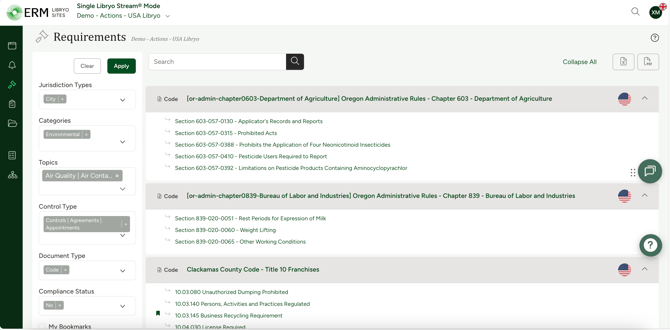
Filters allow you to narrow down your requirements list. Click the Filter button to open the filter panel. Available filter categories include:
- Jurisdiction Type (e.g. Municipal, National, Provincial)
- Category (e.g. Environmental, Occupational Health and Safety)
- Topics
- Control Types
- Document Types
- Compliance Status
You can apply multiple filters at once. To remove a filter, click the X next to it, or click Clear to reset.
Exporting Your Legal Register
Libryo Sites gives you the ability to export and print you Legal Register.
1. Using your menu on the left, click on Requirements.
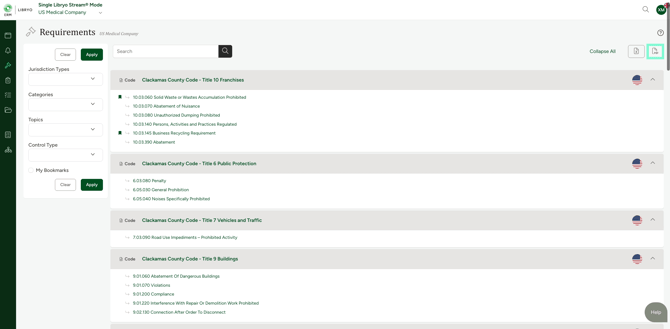
2. To export your legal register to an Excel spreadsheet, simply click on Export Excel in the top right corner of your screen.
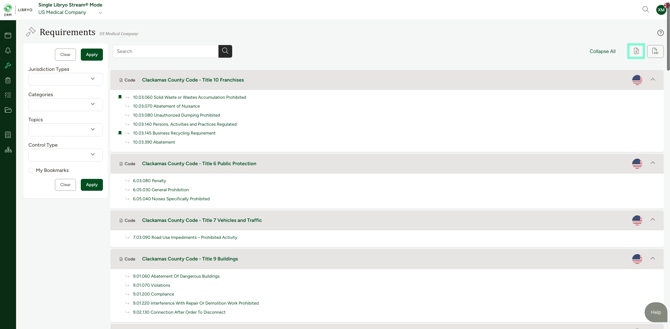
3. To export your legal register to PDF, just click on Export PDF in the top right corner of your screen.
Have any questions?
At ERM Libryo, we really want all our users to get the most from our system. We hope that this article was useful. If you still have some questions, please contact us.