
Last updated: 8 Jun 2026
The Drives module is your central document repository within Libryo Sites. It allows you and your team to store, organise, tag, and retrieve compliance documents - all in one place, directly connected to your Libryo Streams® and Organisation.
Documents stored in Drives can include government gazettes, notices, schedules, codes of practice, guidelines, policies, protocols, and any site-specific content relevant to your compliance obligations.
These Drives are split into three categories to keep your documents properly structured as follows:
- The Stream drive, containing folders used by all users with access to that Libryo Stream.
- The Organisation drive, with folders used by all users in your Organisation.
- The Shared documents drive, with folders containing documents shared with you by ERM Libryo, for use by anyone with access to the Libryo Sites application.
Accessing the Drives Module
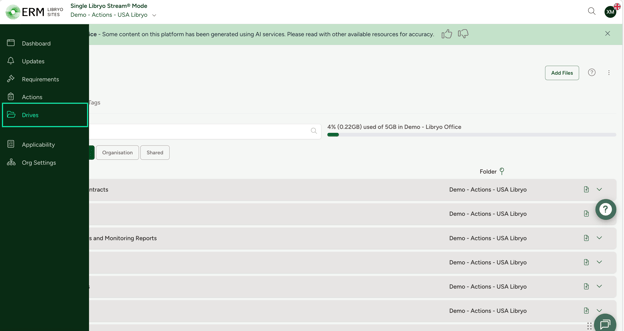
To open the Drives module, click the Drives icon in the left-hand navigation menu. The module opens on the Folders tab by default, displaying all folders available to you.
Finding Your Way Around Drives
The Drives module has two main tabs:
- Folders - Browse and manage your files organized by folder.
- Tags - Browse all files grouped by their assigned tags.
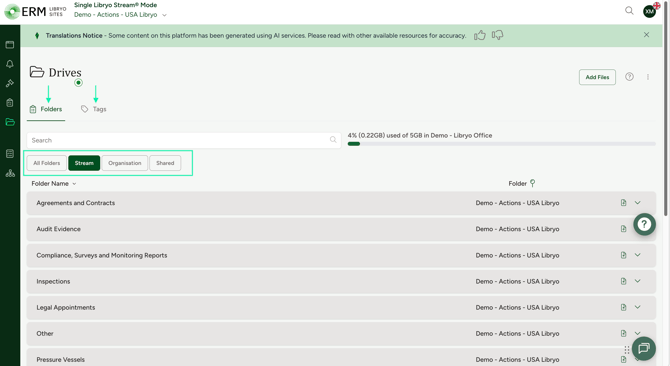
Within the Folders tab, you can filter your view using the following options:
|
Section |
Description |
|
All Folders |
Displays all folders across Stream, Organzation, and Shared categories. |
|
Stream |
Shows only folders associated with the Libryo Stream® you are currently viewing. |
|
Organisation |
Shows folders accessible to all users in your organization. |
|
Shared |
Shows folders shared with you by ERM Libryo, available to anyone with access to Libryo Sites. |
A storage usage indicator is displayed at the top of the page, showing how much of your allocated storage is in use (e.g. 4% of 5GB used).
Understanding Folder Types
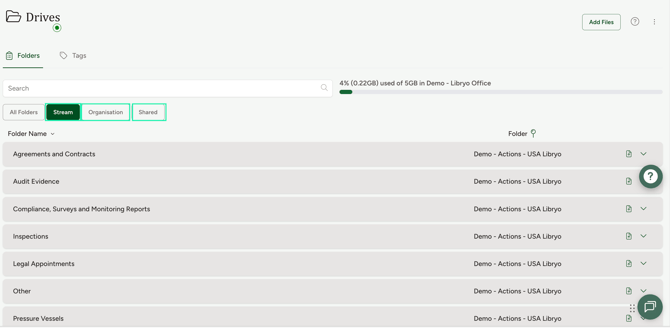
Each folder in Drives belongs to one of three Drive categories:
-
Stream Drive
Folders used by all users with access to a specific Libryo Stream®. These are used to store site-specific documents and are only visible to users who have access to that stream. Examples include: Agreements and Contracts, Audit Evidence, Inspections, Legal Appointments, and Compliance Surveys and Monitoring Reports.
-
Organisation Drive
Folders accessible to all users within your organisation, regardless of which Stream they are viewing. These are ideal for organisation-wide documents such as Attachments, Audits and Performance Reviews, and Compliance Checklists.
-
Shared Documents Drive
Folders containing documents shared with you by ERM Libryo, available to all users with access to the Libryo Sites application. These include useful compliance documents such as International Treaties and Conventions, and General Standards and Rules.
Note: It is recommended that you click through these folders to familiarise yourself with the content available to your team.
Uploading Files
Any user with access to a Libryo Stream® or Organisation can upload files to the corresponding Drive folders. Uploaded files are safely stored and accessible to the rest of your team.
To upload a file:
-
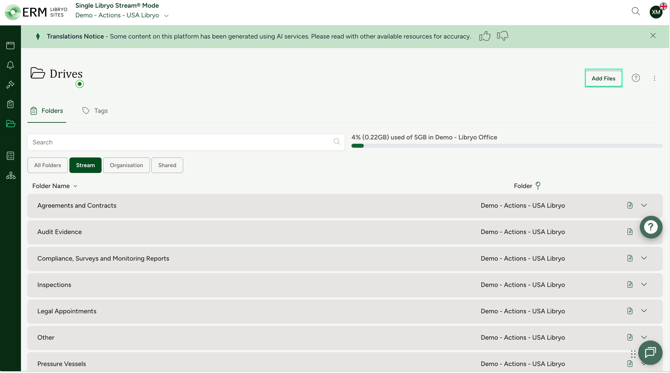
Click the Add Files button in the top right corner of the Drives page.
-
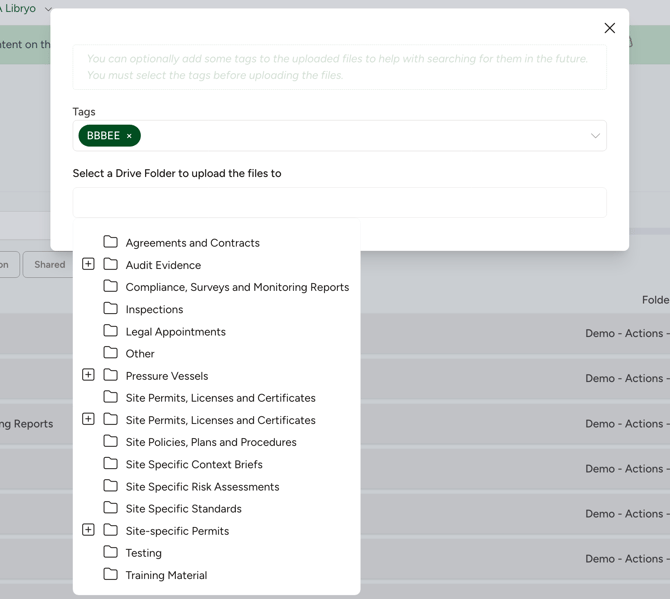
Select the Drive Folder you want to upload the file to from the dropdown.
-
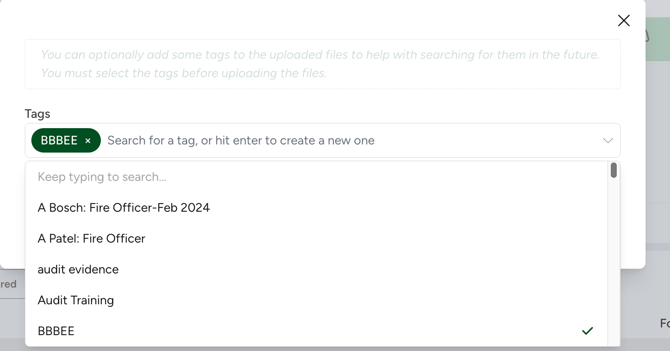
Optionally, select Tags to apply to the file. Tags must be selected before uploading - they cannot be added through this flow after the upload is complete.
-
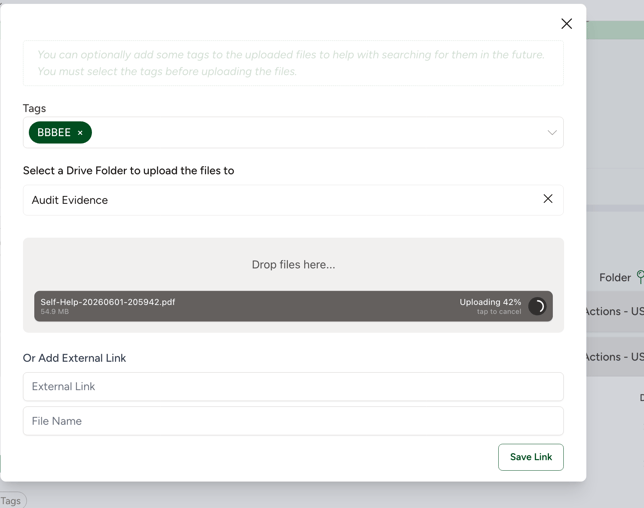
Drag and drop your file into the upload area or click to browse and select it from your computer.
-
Once uploaded successfully, the file will appear in the folder you selected.

Note: Tags must be assigned before uploading. You can still add or edit tags on a file after upload by opening the file directly - see Adding Tags to Files below.
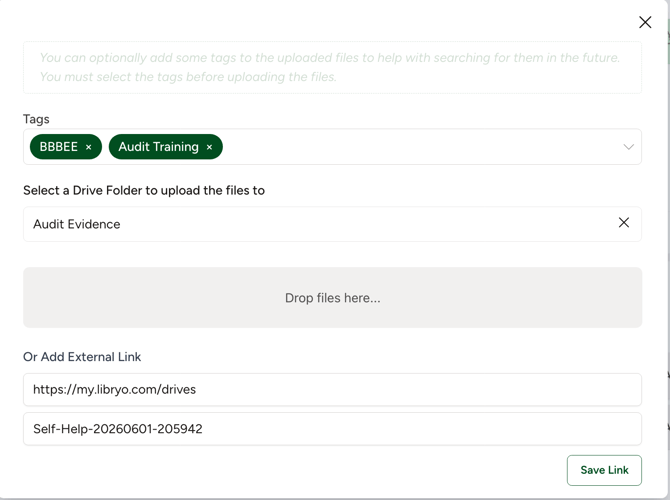
Adding External Links
In addition to uploading files, you can store external links (such as URLs to cloud-hosted documents or external resources) directly within a Drive folder.
-
Click Add Files in the top right corner.
-
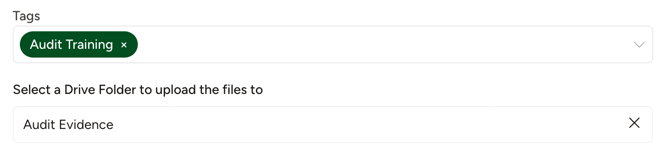
Select the destination folder.
-
Scroll to the Or Add External Link section.
-
Enter the External Link (URL) and a File Name to display in the folder.
-
Click Save Link.
Viewing a File
Clicking on any file name in Drives opens the File Detail view, which provides full information about the file and a set of actions you can take on it.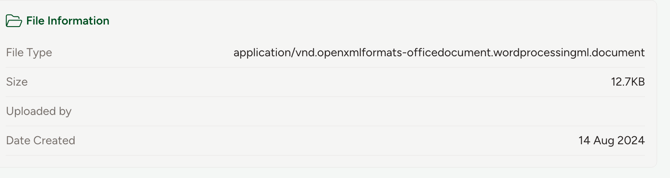
File Information
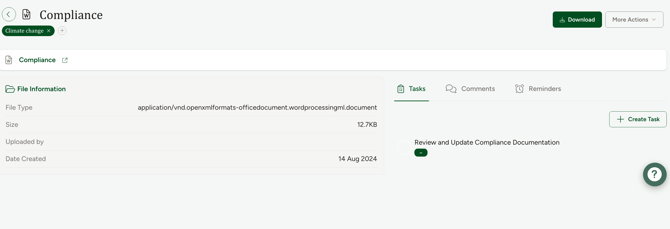
The left panel of the File Detail view displays the following metadata:
|
Field |
Description |
|
File Type |
The format of the uploaded file (e.g. spreadsheet, PDF, Word document). |
|
Size |
The file size in KB or MB. |
|
Uploaded by |
The user who uploaded the file. |
|
Date Created |
The date the file was added to Drives. |
Downloading a File
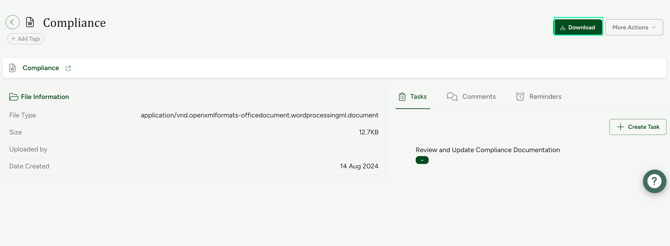
To download a file, open it to access the File Detail view and click the Download button in the top right corner. You can also download directly from the folder view by clicking the Download option next to the file name.
Opening a File Externally
If the file is linked to an external source, an external link icon will appear next to the file name in the detail view. Click it to open the file in a new browser tab.
Adding Tags to a File
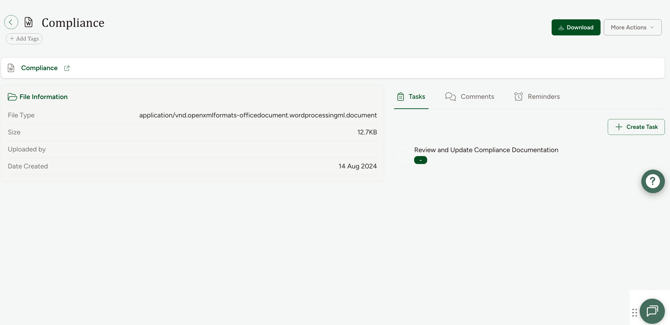
You can add or manage tags directly from the File Detail view:
-
Open the file by clicking on its name in the folder.
-
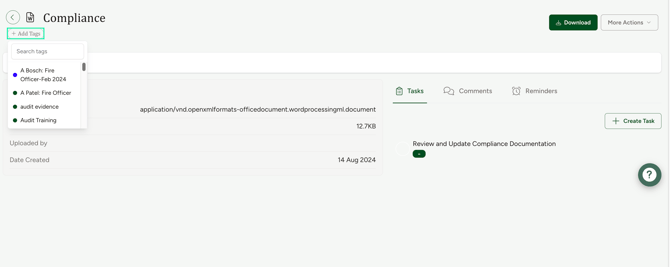
Click + Add Tags below the file name.
-
Search for or select the relevant tag(s) from the dropdown.
-
The tag is applied immediately.
More Actions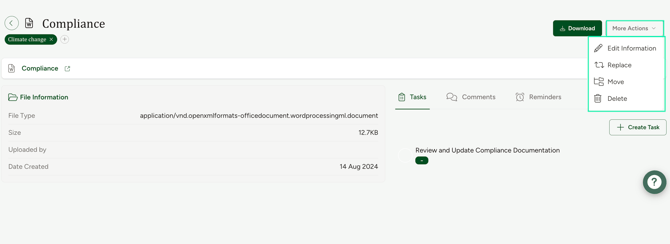
The More Actions button in the top right corner of the File Detail view provides the following options:
|
Action |
Description |
|
Edit Information |
Edit the file name or other metadata. |
|
Replace |
Replace the existing file with a new version while keeping the same file record. |
|
Move |
Move the file to a different Drive folder. |
|
Delete |
Permanently remove the file from Drives. |
Creating Tasks from Your Files
You can create tasks directly linked to a file from the Tasks tab in the File Detail view. This is useful for assigning follow-up actions related to a specific compliance document.
To create a task:
-
Open the file to access the File Detail view.
-
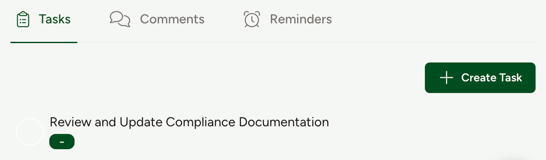
Go to the Tasks tab on the right panel.
-
Click + Create Task.
-
Fill in the task details (see fields below) and click Save or Save & Edit.
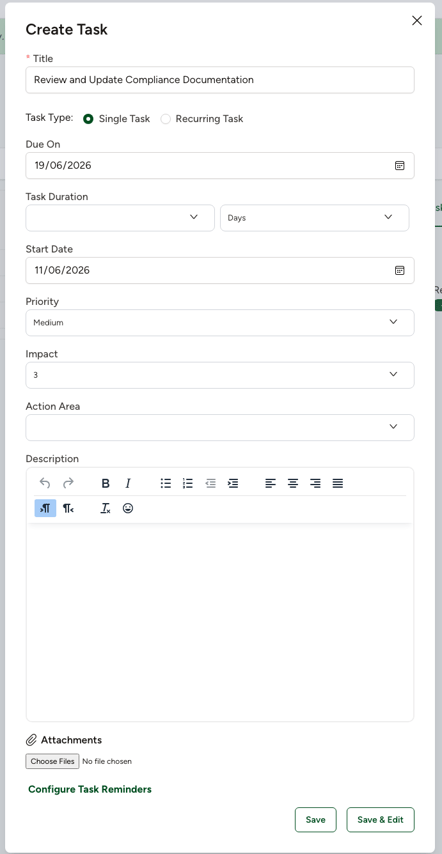
The Create Task form includes the following fields:
|
Field |
Description |
|
Title |
The name of the task (required). |
|
Task Type |
Single Task or Recurring Task. |
|
Due On |
The date by which the task must be completed. |
|
Task Duration |
The estimated duration of the task (number and unit, e.g. 3 Days). |
|
Start Date |
The date the task is expected to begin. |
|
Priority |
The priority level of the task (e.g. Medium). |
|
Impact |
The impact rating of the task (e.g. 1 - Low). |
|
Action Area |
Link the task to a specific Action Area within your stream. |
|
Description |
A free-text field to add context or instructions for the task. |
|
Attachments |
Select a Drive folder to attach supporting files to the task. |
|
Configure Task Reminders |
Set up reminders associated with this task. |
Making a Comment
The Comments tab in the File Detail view allows you to leave notes or observations directly on a file for your team's reference.
To add a comment:
-
Open the file to access the File Detail view.
-
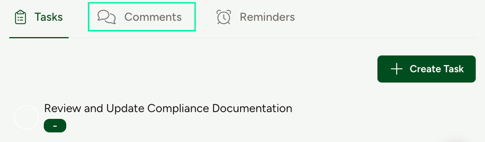
Click on the Comments tab on the right panel.
-
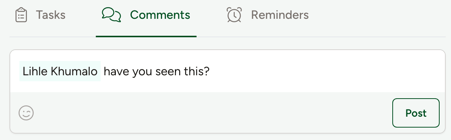
Type your comment in the text field.
-
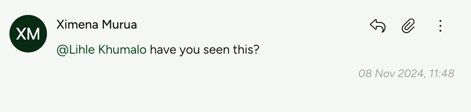
Click Post to save the comment.
Creating a Reminder Set
The Reminders tab allows you to set up reminder sets directly on a file - useful for prompting periodic reviews or follow-up actions related to a compliance document.
To create a reminder set:
-
Open the file to access the File Detail view.
-
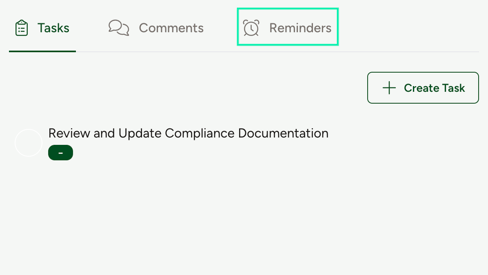
Click on the Reminders tab on the right panel.
-
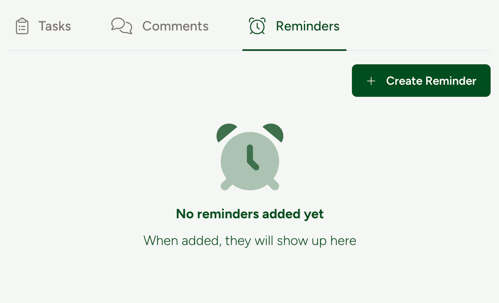
Click + Create Reminder.
-
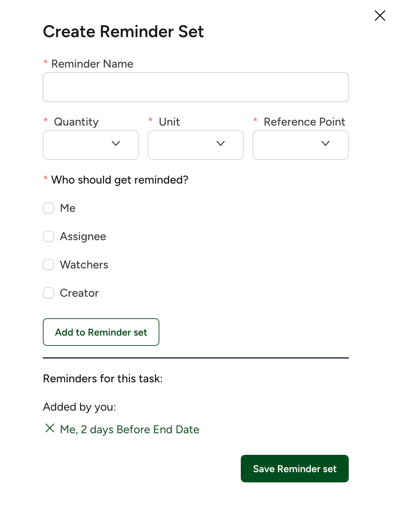
Configure the reminder set details, and click Add to Reminder Set to add this reminder. You can add multiple reminders to the same set. Once you have added all reminders, click Save Reminder Set.
Note: When no reminders have been added yet, the tab will display: 'No reminders added yet - when added, they will show up here.'
Searching for Files
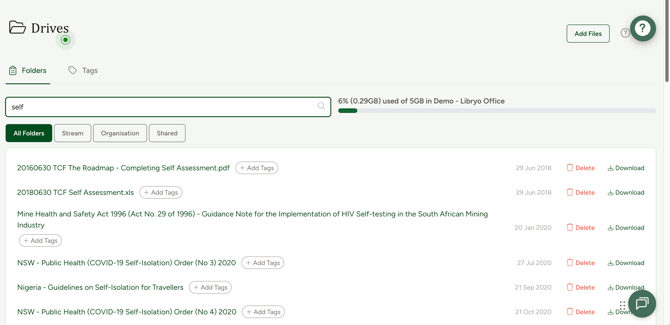
You can search for files across Drives using the Search bar at the top of both the Folders and Tags tabs.
- In the Folders tab, the search is scoped to your active filter (All Folders, Stream, Organisation, or Shared). Results display matching file names with their creation date and available actions.
- In the Tags tab, the search filters by a tag name. Results show how many files are associated with each matching tag.
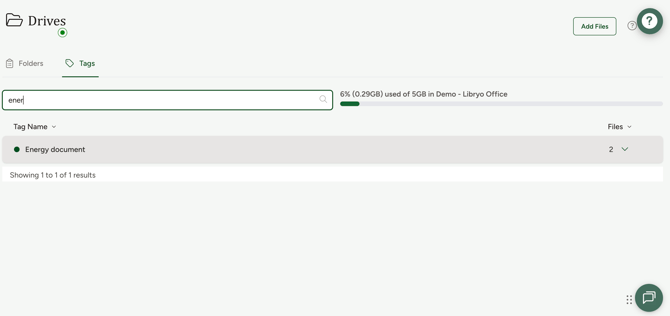
Note: Searching by file name in the Folders tab returns results instantly as you type.
Browsing by Tags
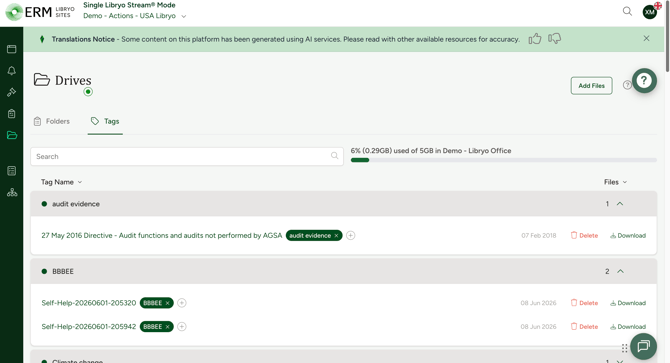
The Tags tab provides an alternative way to navigate your files - organised by tag rather than by folder. This is particularly useful when you need to find all documents related to a specific topic, obligation, or category.
Each tag is listed with its name and the number of files associated with it. Expand a tag to view all files that have been assigned that label. From the expanded view, you can add or remove tags, delete files, or download them.
Note: If a tag has no files associated with it, it will show (No Files) next to the tag name.
Have any questions?
At ERM Libryo, we really want all our users to get the most from our system. We hope that this article was useful. If you still have some questions, please contact us.